Hi, I’m Claire. Let’s talk about the unsung hero of your home.
You don’t look at it. You don’t talk about it at dinner parties. You probably don’t even know how old it is. But the moment it fails—usually at 6:00 AM on a Tuesday when you have shampoo in your hair and the water turns to ice—it becomes the most important thing in your life.
I’m talking about your water heater.
For decades, the choice was simple: You bought a big metal tank, stuck it in the basement, and forgot about it for 10 years. But today, homeowners are faced with a major decision: Stick with the Traditional Tank or upgrade to a Tankless (On-Demand) system?
The marketing for tankless is seductive. “Endless hot water!” “Save 40% on energy!” “Save space!”
But as someone who has managed dozens of renovations, I’m here to tell you that the reality is more nuanced. Tankless heaters are amazing, but they aren’t magic, and they aren’t right for every house.
In this comprehensive guide, we are going to strip away the sales pitch. We will dive deep into the pros, cons, and the brutal reality of long-term costs. We’ll look at installation hurdles, maintenance realities, and the ROI math to help you make the right choice for your family and your wallet.
The Contenders: How Do They Actually Work?
Before we fight about money, let’s understand the engineering.
The Traditional Tank (Storage Water Heater)
Think of this as a giant tea kettle that is always on.
-
How it works: It fills a 40, 50, or 80-gallon drum with cold water. A gas burner (at the bottom) or electric elements (inside) heat that water to a set temperature (usually 120°F).
-
The Catch: It keeps that water hot 24/7, even when you are sleeping or on vacation. When you turn on the shower, it pulls hot water from the top of the tank. When the tank is empty, you have to wait 30-40 minutes for it to reheat.
The Tankless (On-Demand Water Heater)
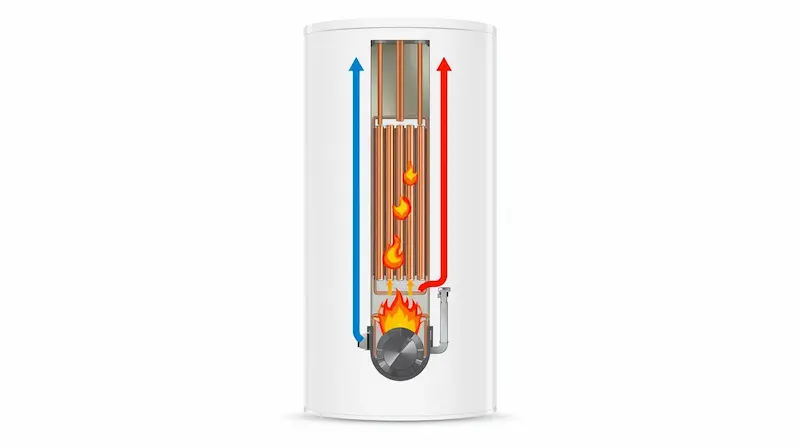
Think of this as a super-powered radiator.
-
How it works: There is no storage tank. When you turn on a hot water tap, cold water travels through a pipe into the unit. A sensor detects the flow and ignites a massive gas burner (or electric coils). The water runs through a heat exchanger and is heated instantly as it passes through.
-
The Catch: It doesn’t run out of hot water, but it can only heat a certain amount of water at once (measured in Gallons Per Minute, or GPM).
Round 1: The Traditional Tank Water Heater
Let’s start with the old reliable. Despite the new tech, these still make up the majority of installations in North America.
The Pros
-
Low Upfront Cost: This is the biggest winner. A standard 50-gallon gas tank costs $600 – $1,200 (unit only). Installation is straightforward because it usually swaps right out with your old one.
-
Simplicity: No complex computers, no fan motors, no sensors. Fewer parts mean fewer things to break.
-
High Flow Rate: A tank doesn’t care how many showers are running at once. As long as there is hot water in the tank, you can run the dishwasher, washing machine, and shower simultaneously with no pressure drop.
-
Emergency Water Supply: In a power outage or natural disaster, you have 50 gallons of potable water sitting in your basement.
The Cons
-
Standby Energy Loss: This is the big inefficiency. You are paying to heat water at 3:00 AM when no one is using it. It’s like leaving your car idling in the driveway just in case you need to drive somewhere.
-
You Can Run Out: If you have teenagers, you know this pain. Once the tank is drained, you are taking a cold shower until it recovers.
-
Size: They are massive. They take up precious floor space in your utility room or garage.
-
shorter Lifespan: A traditional tank lasts 10-12 years. When they fail, they often fail catastrophically (leaking 50 gallons of water onto your floor).
Round 2: The Tankless Water Heater
The modern challenger. Is it really the upgrade of the century?
The Pros
-
Endless Hot Water: Notice I said endless, not instant (we’ll get to that). You can literally take a 4-hour shower, and the water will be hot the entire time.
-
Energy Efficiency: According to the U.S. Department of Energy, tankless units can be 24%–34% more energy-efficient than storage tank water heaters. They only burn gas when you open the tap.
-
Lifespan: A well-maintained tankless unit can last 20+ years. Most parts are replaceable, so you fix it rather than throw it away.
-
Space Saving: They are the size of a small suitcase and mount on the wall. You gain back 9 square feet of floor space.
The Cons
-
High Upfront Cost: The unit costs $1,000 – $2,500+. But the installation is the real killer (more on that below).
-
** The “Cold Water Sandwich”:** If you turn the faucet off (to lather up) and then back on, you might get a burst of cold water before it gets hot again.
-
Flow Limits (GPM): If you try to run two showers and the washing machine at the exact same time, the unit might struggle to heat that volume of water fast enough, resulting in lukewarm water for everyone.
-
Maintenance: They are divas. They require annual flushing (descaling) to keep working.
The Financial Showdown: Cost vs. ROI
This is the part where I ruin the sales pitch with math. Many people buy tankless thinking the energy savings will pay for the unit in a year or two. That is rarely true.
Let’s look at the numbers for a typical family home.
1. The Installation Cost (The Reality Check)
Replacing a Tank with a Tank is easy. Replacing a Tank with a Tankless is a construction project.
-
Traditional Tank Install: $1,500 – $2,200 (Total)
-
Tankless Install: $3,500 – $5,500+ (Total)
Why is Tankless so expensive to install?
-
Venting: You cannot use your old metal chimney. Tankless units need specialized PVC or Stainless Steel venting run out the side of your house.
-
Gas Line Upgrade: This is the one no one tells you about. A tankless unit needs a massive burst of flame to heat water instantly. It often requires 199,000 BTUs. Your current ½-inch gas pipe likely isn’t big enough. You may need to pay a plumber to run a new ¾-inch gas line from your meter. That costs thousands.
-
Electrical: Gas tankless units need a standard outlet to power the computer/fan. Your old tank didn’t.
2. Annual Operating Savings
-
Tankless Savings: You will save roughly $100 – $150 per year on your gas bill compared to a standard tank.
3. The ROI Calculation
Let’s do the math.
-
Price Difference (Install): Approx. $2,500 more for Tankless.
-
Annual Savings: $125/year.
-
Payback Period: $2,500 / $125 = 20 Years.
The Verdict: If you are buying tankless strictly to save money, don’t do it. The payback period is often longer than the lifespan of the unit. You buy tankless for the lifestyle (endless hot water) and the longevity, not the quick cash savings.
The “Instant Hot Water” Myth
I need to clear this up because it drives me crazy.
Tankless water heaters do NOT give you instant hot water.
When you turn on the shower upstairs, you still have to wait for the cold water sitting in the pipes to flush out before the hot water arrives. In fact, tankless units take longer (about 5-10 seconds longer) to deliver hot water than a tank, because the machine has to detect the flow, purge the combustion chamber, ignite the burner, and heat the water before sending it out.
If you want instant hot water (turning the tap and it’s immediately hot), you need a Recirculation Pump.
-
Many premium tankless units (like Rinnai or Navien) come with built-in recirculation pumps. This keeps hot water moving in your pipes loop, but it increases the cost of the unit and uses more energy.
The Hard Water Warning
If you live in an area with “hard water” (water with high mineral content like calcium and magnesium), you must be careful.
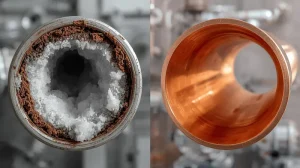
Tankless heaters have very narrow internal waterways. When water is heated rapidly, minerals precipitate out and form scale (lime buildup).
-
In a Tank: Scale settles at the bottom. It reduces efficiency but the tank keeps working.
-
In a Tankless: Scale coats the heat exchanger. It will cause the unit to overheat, throw error codes, and eventually fail completely.
Claire’s Pro Tip: If you go tankless in a hard water area, you must commit to flushing the unit with vinegar once a year (a 1-hour DIY job) or install a water softener. If you ignore maintenance, you will kill a $4,000 machine in 4 years.
Electric vs. Gas Tankless: A Crucial Distinction
Most of this guide assumes you have natural gas. What if your home is all-electric?
Be very, very careful with Electric Tankless Heaters.
To heat water instantly using only electricity requires a massive amount of power. A whole-house electric tankless unit might require three or four 40-amp breakers.
-
Most older homes only have a 100-amp or 200-amp main panel.
-
Installing electric tankless often requires upgrading your entire home electrical service to 300 or 400 amps. This can cost $3,000 – $5,000 just for the electrical work.
For electric-only homes, I almost always recommend a Hybrid Heat Pump Water Heater (a tank that uses heat pump tech) instead of tankless. It is the most efficient water heater on the planet.
Final Verdict: Which One Should You Buy?
Here is my decision matrix for 2026.
Stick with a Traditional Tank If:
-
Budget is #1: You need a replacement ASAP and have less than $2,000 to spend.
-
Easy Swap: You want a simple installation without re-piping gas lines or drilling new vents.
-
Electric Home: You don’t have gas, and you don’t want to upgrade your electrical panel.
-
Low Maintenance: You are the type of person who wants to install it and ignore it for 10 years.
Upgrade to Tankless If:
-
Large Family: You frequently run out of hot water with back-to-back showers.
-
Space is Tight: You want to reclaim that closet space or move the heater to a wall.
-
Long-Term Home: You plan to live there for 15+ years and will benefit from the durability.
-
Luxury Tub: You have a giant soaking tub that a standard 50-gallon tank simply cannot fill up.
Conclusion
The “Tankless vs. Traditional” debate isn’t about right or wrong. It’s about expectations.
If you expect a tankless heater to pay for itself in energy savings quickly, you will be disappointed. But if you view it as a luxury lifestyle upgrade—like granite countertops or heated floors—that creates a better living experience for your family, then it is absolutely worth the investment.
Assess your budget, check your gas lines, and enjoy that endless hot shower.