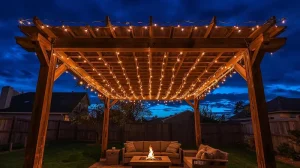
You have finally finished your backyard oasis. The Attached Pergola is built, the Outdoor String Lights are hung, and your patio looks like a page out of a magazine.
But as the sun goes down and the evening air gets a little chilly, there is one thing missing: Fire.
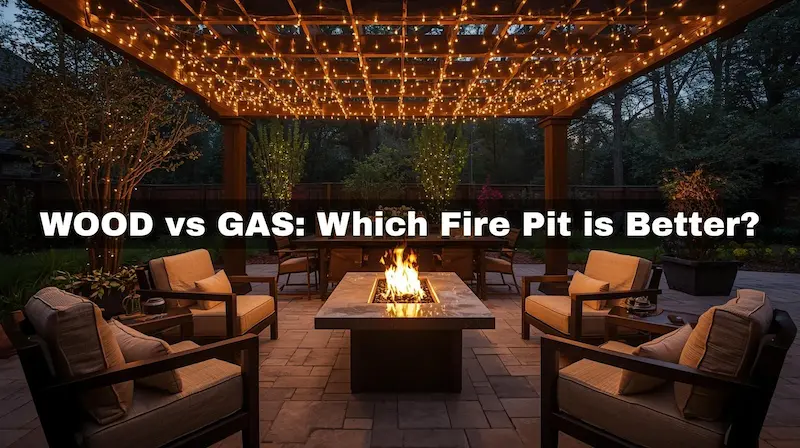
Adding a fire pit extends the life of your patio into the fall and early spring. It becomes the natural gathering spot for your family and guests. But when you start shopping, you are immediately hit with a major decision: Do you go with a traditional Wood-Burning fire pit or a modern Gas/Propane fire table?
It is not just a question of aesthetics; it is a question of lifestyle, safety, and budget.
In this guide, we are going to settle the “Wood vs. Gas” debate once and for all so you can buy the right one for your space.
The Case for Wood Fire Pits
There is something primal about a real wood fire. It is what most of us grew up with, and it engages all of your senses.
The Pros:
-
The Heat: Wood fires burn significantly hotter than gas. If your primary goal is to actually stay warm on a freezing night, wood is the undisputed champion.
-
The Sound and Smell: You cannot fake the authentic crackle and pop of real wood, or that nostalgic campfire smell.
-
The Cost (Upfront): You can buy a basic steel wood fire bowl at a hardware store for under $50. Or, you can build a stone ring yourself for under $100.
-
Cooking: You can roast hot dogs and marshmallows perfectly over real wood embers. (You should never roast marshmallows over a gas fire pit—the dripping sugar will ruin the gas burners).
The Cons:
-
The Smoke: This is the biggest dealbreaker. Unless you invest in a “smokeless” pit (like a Solo Stove or Breeo, which cost $300+), you will constantly be dodging smoke as the wind shifts. You will go inside smelling like a campsite.
-
The Maintenance: You have to buy/chop wood, store it so it stays dry, build the fire, tend to it, and scoop out the messy ashes the next day.
-
Safety & Restrictions: Because of flying embers, you cannot use a wood fire pit under a covered patio, under low tree branches, or on a wooden deck without a heavy-duty protective mat. Furthermore, many cities and HOAs ban wood fires entirely.
The Case for Gas (Propane/Natural Gas) Fire Pits
Gas fire pits (usually designed as “fire tables”) have exploded in popularity over the last five years, and for good reason.
The Pros:
-
Instant Gratification: Turn a knob, push a button, and you have a fire. When you are ready to go to bed, turn the knob off. No waiting for embers to die down or worrying about putting it out with a hose.
-
Zero Smoke: No stinging eyes, no smelly clothes, and no dodging the smoke cloud.
-
Safe for Decks & Patios: Because there are no flying sparks, gas fire pits are generally safe to use on wooden decks, composite decking, and under pergolas (always check the manufacturer’s clearance guidelines first).
-
Aesthetics: They look incredibly sleek and modern. When not in use, many gas fire pits come with a lid, turning them into a functional outdoor coffee table.
The Cons:
-
The Cost: They are expensive. A decent propane fire table starts around $200 and can easily exceed $1,000 for high-end models.
-
Less Heat Output: While they look pretty, gas fires simply do not produce the radiant, bone-warming heat of a massive wood fire.
-
Fuel Hassle: If you use propane, you have to constantly swap out the heavy 20lb tanks (just like a BBQ grill). If you want to hard-wire it to your home’s natural gas line, you will have to pay a licensed plumber hundreds of dollars to run the pipe.
The Verdict: Which Should You Buy?
Still on the fence? Here is the simple breakdown:
Buy a WOOD Fire Pit if:
-
You have a large, open backyard away from the house.
-
You love the authentic campfire experience and want to roast marshmallows with the kids.
-
You are on a tight budget.
-
Claire’s Advice: If you go with wood, spend the extra money on a Smokeless Fire Pit (like a Solo Stove). It eliminates 90% of the smoke problem and makes the experience so much better.
Buy a GAS Fire Pit if:
-
You are placing it on a wooden deck, a patio close to the house, or under a pergola.
-
You value convenience. (You are much more likely to use a fire pit on a random Tuesday night if all you have to do is push a button).
-
You hate smelling like smoke.
Final Thoughts
Whichever you choose, adding a fire element is the ultimate upgrade for your backyard. Once it is installed, grab a glass of wine, turn on your patio lights, and enjoy your new outdoor living room!